
I’m assuming you’re reading this because you are strongly considering the scuba diving Open Water course. Or you have already booked it. If so, congrats! You have just opened a door to so many new experiences and unlocked a new level on the map.
Let’s dive in…
Table of Contents
How the course runs… usually
So I’m sorry to tell you, but you’ll have homework, whether you’ve booked an e-learning course or a traditional course (if people still choose that option). Whichever agency you go with, you’ll need to do a bit of reading before your first class.
It can be a little hard to chew through at times but my best advice is to give yourself plenty of time. The reading you do beforehand will help you digest what you’re getting yourself into.
Confined Water
Once you’ve finished all the pre-course learning, your instructor is going to take you through the confined-water portion of your Open Water course. This will usually happen in a pool or another calm, shallow body of water. You’ll also need to show that you’re comfortable in the water. Sounds obvious, I know, but I’ve had to tell a few people they couldn’t continue until they could demonstrate that they were safe in the deep end.
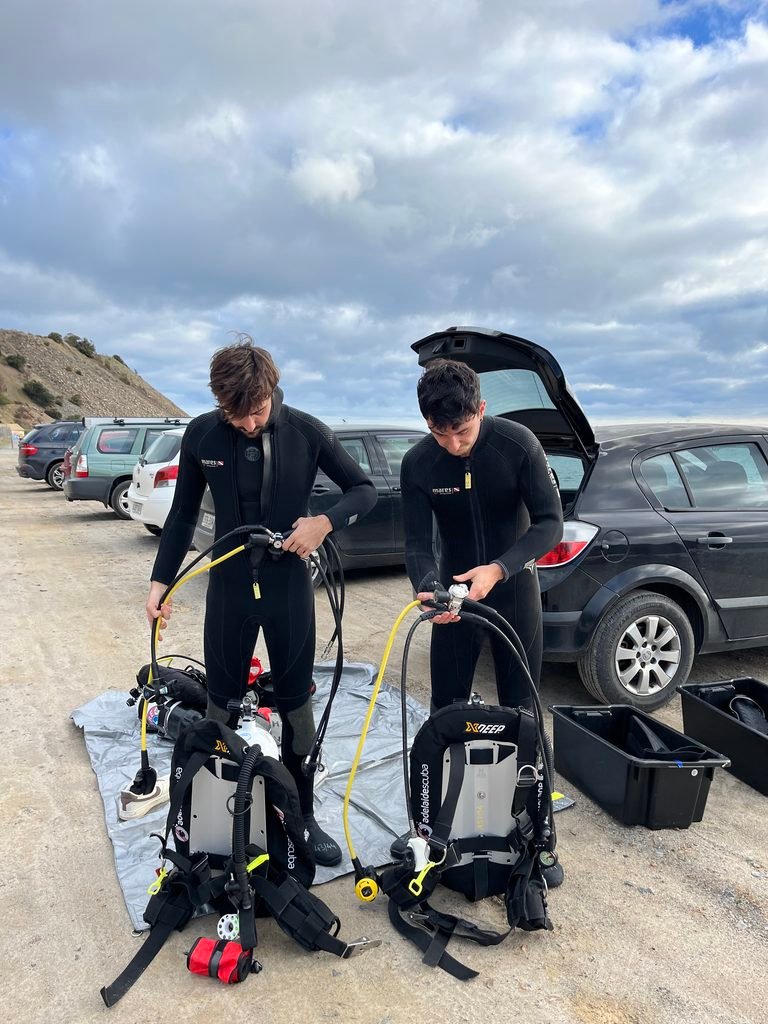
The swim test involves treading water for 10 min and swimming 200 meters with no time limit. If you’re not feeling confident, it might be worth hitting up your local pool for a practice swim or two.
In confined water, you’ll practise a bunch of skills, like what it feels like to breathe underwater, how to clear your mask if it gets foggy, how to swim without using your hands and much more.
The skill that I’ve found as an instructor that people struggle with the most is clearing their mask, or the part where you have to take your mask all the way off and put it back on again… underwater. I know it sounds scary, but your instructor will help you along the way and will give you tips and ways that will help you get through it.
Depending on how your course is run this could be done in one day or up to three.
Open Water
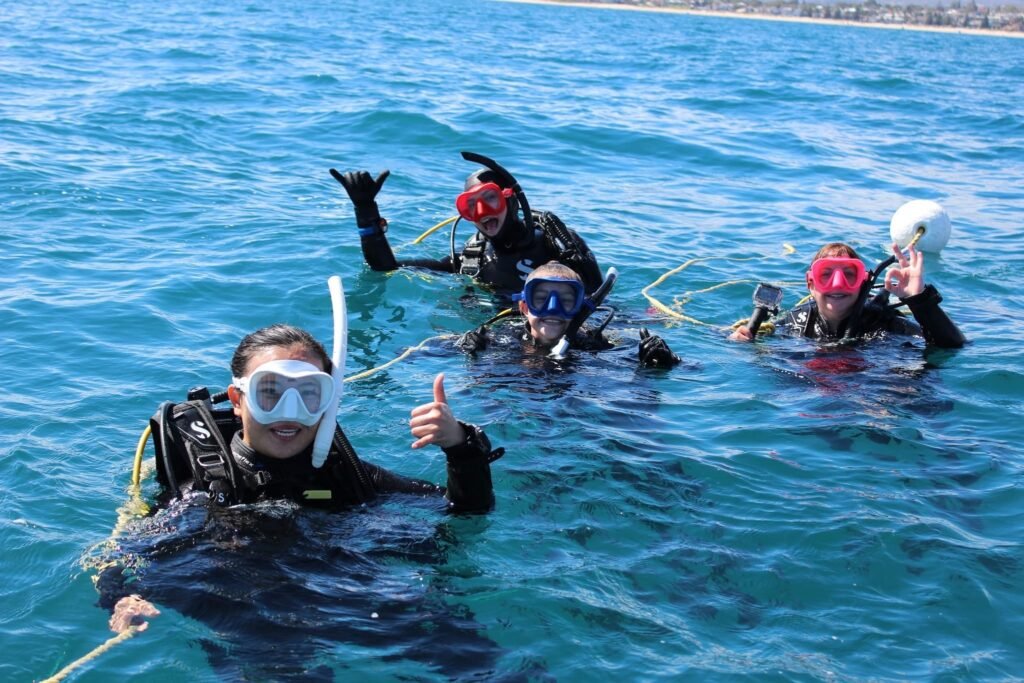
This portion of the course requires four open-water dives in a natural body of water, like a lake or ocean. You can’t complete all four dives in one day; according to PADI and SSI, the maximum training dives in one day is three. The most common schedule is to split the four dives over two days. Are you still with me?
Before each dive, your instructor will brief you on the skills you will be doing before each dive. (These won’t include every skill you practised in the pool) The key difference from the pool is that your instructor won’t demonstrate the skills first. Instead, they’ll signal which skill to perform, and you’ll demonstrate it on your own. This shows both you and your instructor that you can handle common problems, like a leaky mask, without assistance while diving.
Completing Your Confined-Water and Open-Water Training with Different Dive Shops
When I completed my PADI Open Water, I was living at home in Alberta, in the middle of winter. And as you can imagine, completing the open-water portion then wasn’t easy.
If you are in a similar situation, you can complete your pool sessions (confined-water) with your local dive shop and do your open water dives somewhere warmer, perhaps while on vacation.
For example, you can finish the pool session at home, then find a dive shop at your destination to complete the open-water dives and get certified.
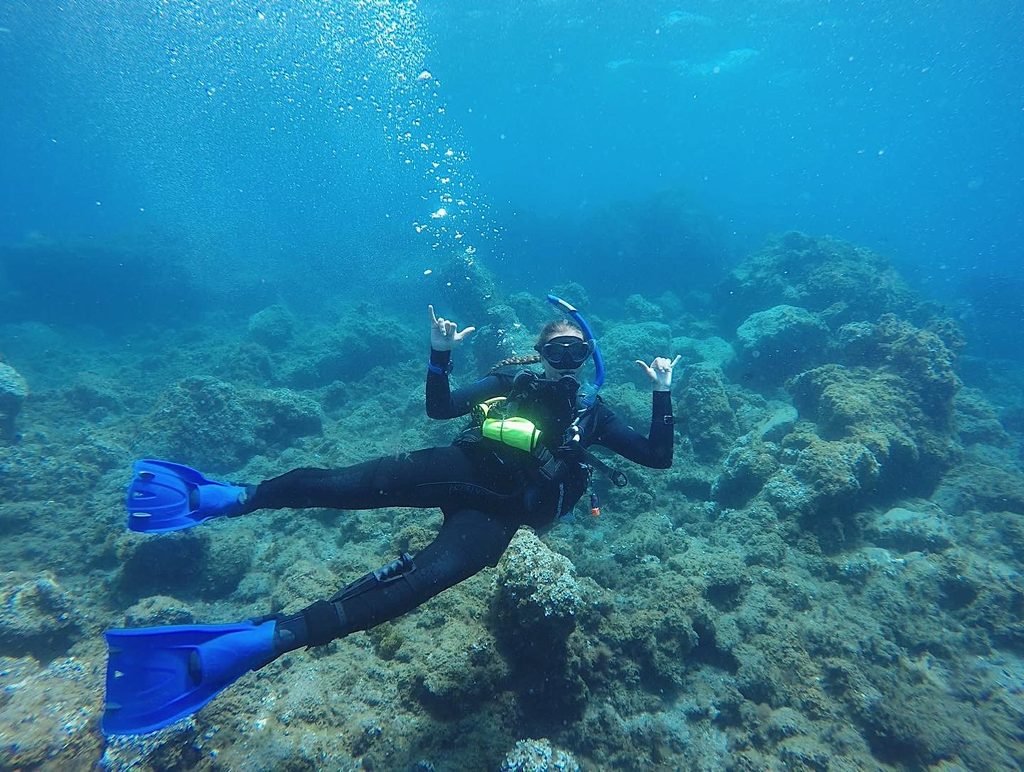
Keep in mind that you’ll need to set aside about two days, or two half-days, of your vacation for the dives. To make the process easier for both you and the dive shop, use the same training agency for both portions. If you complete your confined-water training with an SSI shop, for example, look for an SSI shop at your destination.
You have one year from your pool sessions to complete the open-water portion.
Once you’ve completed your dives and the mask lines have faded, you’ll walk away with a certification that is recognized all over the world. It doesn’t expire, though you will need a refresher if you haven’t dove in over six months. You’ll also have the skills and confidence to explore a whole new world beneath the surface.
And this is just the beginning…
D